
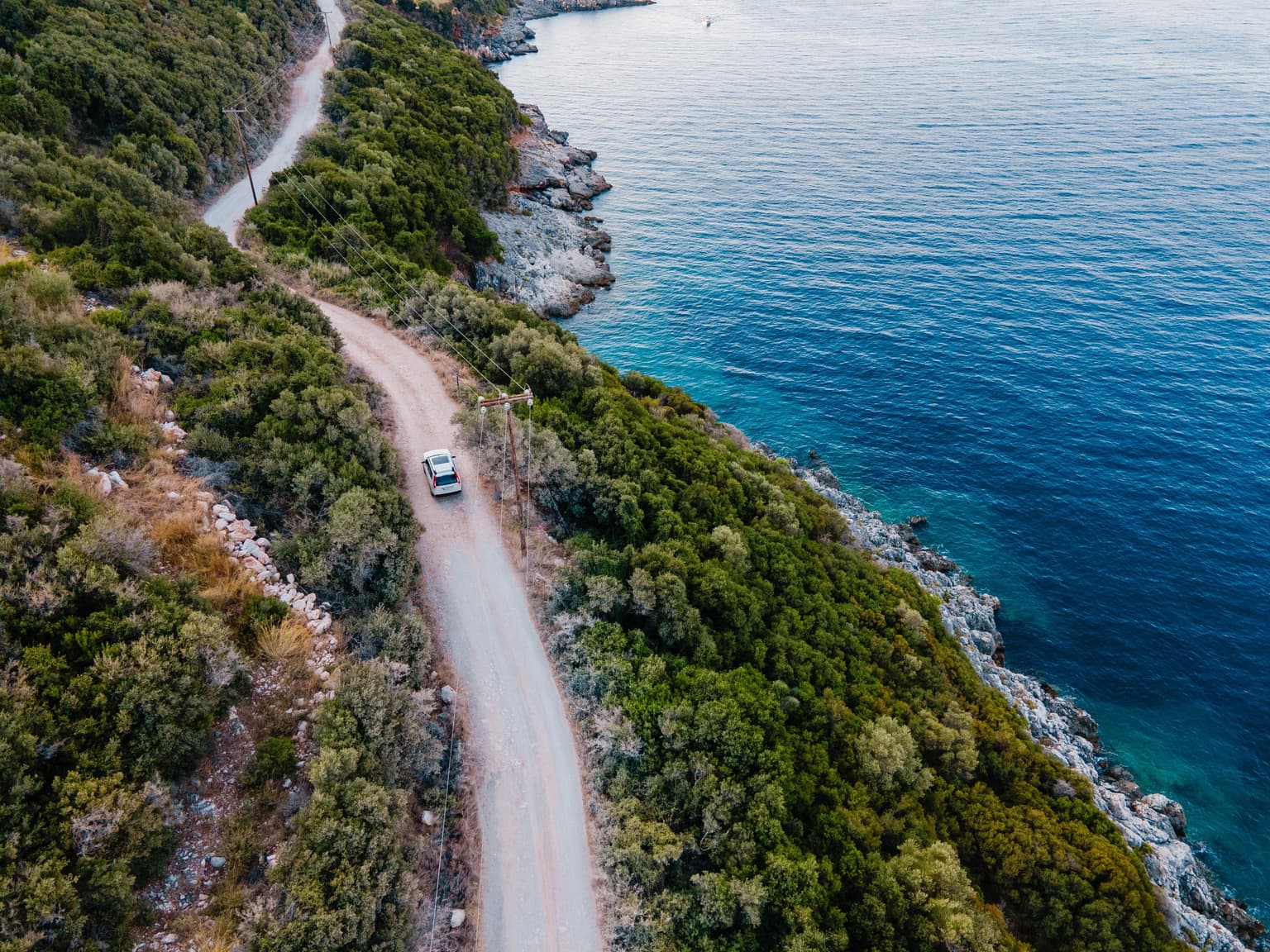
The decision has already been made, your flight date is approaching, and you are finally about to experience Albania. As mentioned in our previous guide, the best way to truly explore this small yet remarkably diverse country is by car. Driving in Albania gives you the freedom to move at your own pace, discover remote destinations, and reach places that organized tours or public transport simply cannot.
From north to south and west to east, renting a car in Albania opens the door to hidden viewpoints, traditional villages rich in character, family-run restaurants serving hearty local food, and untouched landscapes that blend serenity with raw, almost otherworldly beauty. Many of these locations are inaccessible without private transport, making self-driving one of the most rewarding ways to travel the country.
That said, Albania's driving culture can feel unfamiliar at first. If you have spoken to someone who has driven here before—or experienced it yourself—you may have heard it described as unpredictable. While this reputation is not entirely undeserved, understanding local road conditions and driving habits makes the experience far more manageable and enjoyable.
Before landing at Tirana International Airport and collecting the keys to your rental car, here's everything you need to know about road safety, infrastructure, traffic rules, police checks, and practical driving tips in Albania.
Safety First: Understanding Driving Culture in Albania
Many Albanian drivers are confident and technically skilled, particularly when it comes to handling difficult terrain. However, the overall driving environment can sometimes feel chaotic, especially for visitors coming from countries with strict enforcement and highly regulated traffic behavior, such as Northern Europe or North America.
You may notice improvised lane usage, close following distances, and occasional creative interpretations of traffic rules. While this can feel intimidating at first, it's important to remain calm and alert. Defensive driving is the key to staying safe on Albanian roads.
If another driver wants to overtake—even in a place where you wouldn't expect it—the safest option is often to slow slightly and allow them to pass. Avoid confrontations, stay patient in traffic, and don't take honking personally. In Albania, honking is widely used as a form of communication rather than aggression, often to signal presence on narrow roads or blind corners.
Equally important is staying aware of what may appear on the road unexpectedly. In rural areas and mountain regions, it's not uncommon to encounter livestock such as goats, sheep or cows crossing or occupying the road. Maintaining a moderate speed and staying focused will help you react safely and enjoy the drive without unnecessary stress.
Road Conditions in Albania: What to Expect
If you last visited Albania five or ten years ago, the difference in road infrastructure will be immediately noticeable. Major investments have transformed the country's road network, making travel faster, safer, and more comfortable than ever before.
Main highways and national roads connecting cities such as Tirana, Shkodër, Vlorë, Sarandë, Berat and Gjirokastër are generally in excellent condition. New tunnels, bypasses, and corridors have significantly reduced travel times, and even once-challenging routes—such as the road to Theth in the Albanian Alps—are now fully paved.
However, Albania still rewards adventurous travelers willing to go beyond the main routes. As you move toward remote beaches, mountain villages, or lesser-known natural attractions, smooth asphalt may suddenly give way to gravel, uneven surfaces, or potholes. These transitions are not always well signposted.
If your travel plans include exploring secluded destinations or "secret beaches," renting a car with higher ground clearance, such as an SUV or crossover, is highly recommended. While a standard car can handle most routes, added clearance provides comfort and peace of mind on rougher sections.
A crucial safety tip: avoid driving at night whenever possible, especially outside major urban areas. Limited street lighting, minimal signage, wildlife, and slower local traffic make nighttime driving more challenging. Daylight driving is not only safer but also allows you to fully appreciate Albania's scenery.
Police Checks and Traffic Rules in Albania
Police presence on Albanian roads varies depending on location and season. During summer months and along popular tourist routes, you may encounter several checkpoints in a single day, while on quieter roads you may see none at all.
Although police stops can feel intimidating, Albanian traffic police are generally courteous and accustomed to dealing with foreign visitors. Their main focus is traffic flow, speed control and preventing drunk driving.
To avoid any issues, keep the following rules in mind:
- Alcohol and driving: Albania has a very low tolerance for alcohol when driving. Even small amounts can result in fines or license suspension. If you've had any drinks, it's best to let someone else drive.
- Mandatory headlights: Headlights must be on at all times, including during the day. This is strictly enforced and is one of the most common reasons tourists are stopped.
- Speed limits: Speed limits can change abruptly, particularly near towns or intersections. Be alert for sudden drops (for example, from 80 km/h to 40 km/h), as speed cameras and radar checks are often placed nearby.
- Required documents: Always carry your passport or ID, rental agreement and a valid driver's license. While many foreign licenses are accepted, having an International Driving Permit (IDP) is strongly advised to prevent misunderstandings.
Practical Driving Tips for Tourists in Albania
- Fuel stations in Albania operate differently than in many countries. Most are full-service, meaning an attendant will fill your tank for you. Credit cards are widely accepted at larger stations, but carrying some cash in Albanian lek is a good backup, especially in rural areas.
- Navigation apps like Google Maps are useful but not infallible. Some suggested shortcuts may lead you onto poor roads or routes that locals would normally avoid. If a route seems questionable, trust your instincts and stick to main roads.
- Parking can be challenging in major cities and coastal destinations such as Tirana, Vlorë, and Sarandë, particularly during the summer season. Look for paid parking zones or accommodation with private parking. Illegal parking can result in fines or towing, sometimes very quickly.
- Roundabouts deserve special mention. In Albania, vehicles already inside the roundabout typically assume priority, which can surprise drivers used to stricter European conventions. Approach slowly, observe traffic flow, and proceed with caution.
Is Driving in Albania Worth It?
Absolutely. Renting a car and driving in Albania remains one of the best ways to experience the country authentically. While the driving style may feel unfamiliar at first, most visitors quickly adapt and find it far less intimidating than expected.
With a bit of awareness, patience and flexibility, driving becomes part of the adventure rather than an obstacle. It allows you to reach places that define Albania's true charm—untouched nature, quiet villages, dramatic landscapes, and genuine hospitality.
And if an old car with an overly enthusiastic driver overtakes you unexpectedly, just remember: you're here to enjoy the journey as much as the destination.
Safe and unforgettable travels in Albania!